
Air Purification
AIR PURIFICATION IN Elk River, MN
The EPA puts Americans indoors roughly 90 percent of the time, and indoor pollutant levels commonly run two to five times higher than outdoor air. GNL Enterprises, LLC tests indoor air quality in Elk River, MN, screening for mold spores, dust, dander, pollen, tobacco smoke, formaldehyde, and the solvent fumes that come off paints, adhesives, and cleaners. Every reading arrives with the correction it calls for, backed by 20 years of diagnosing houses across Sherburne County and beyond.
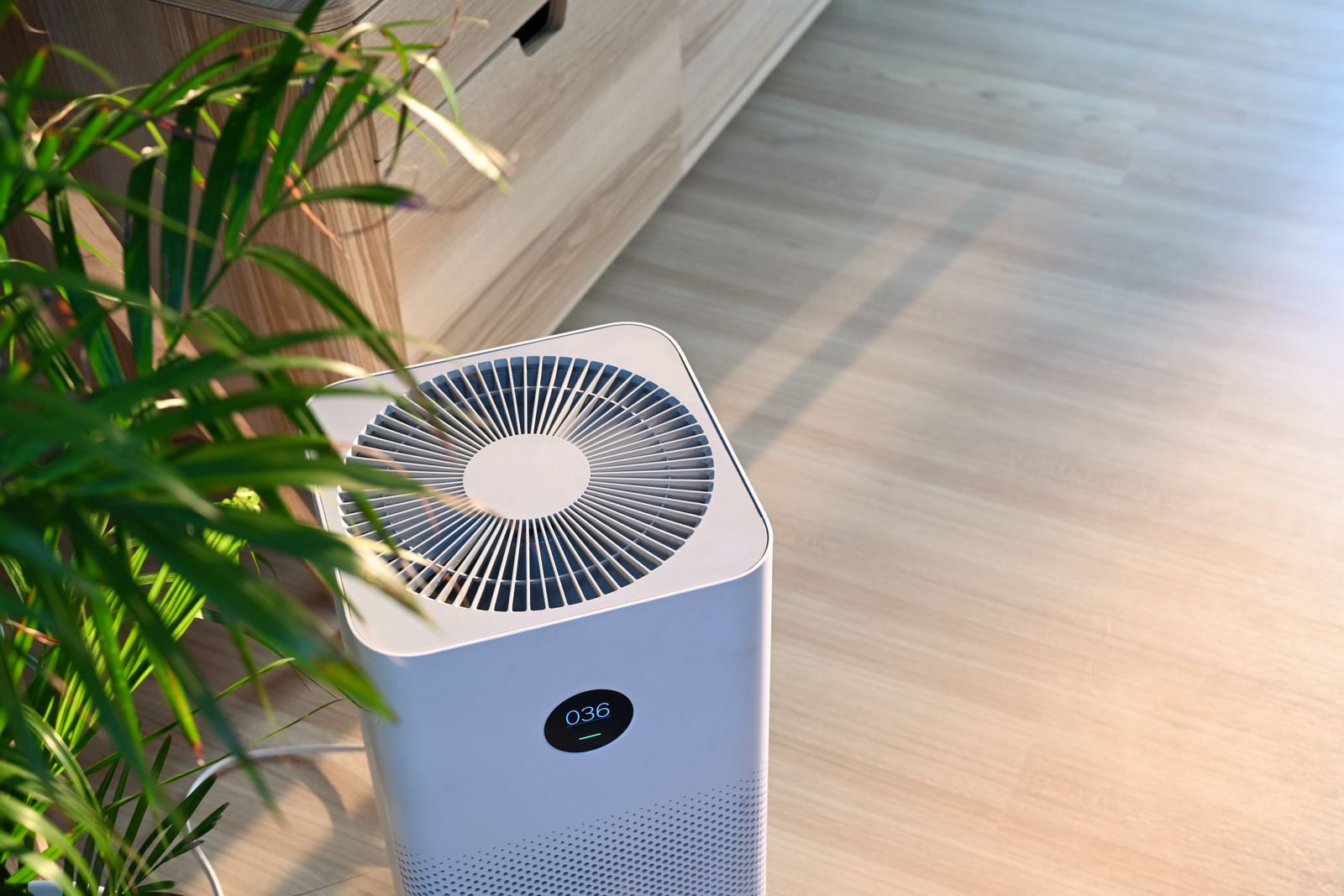
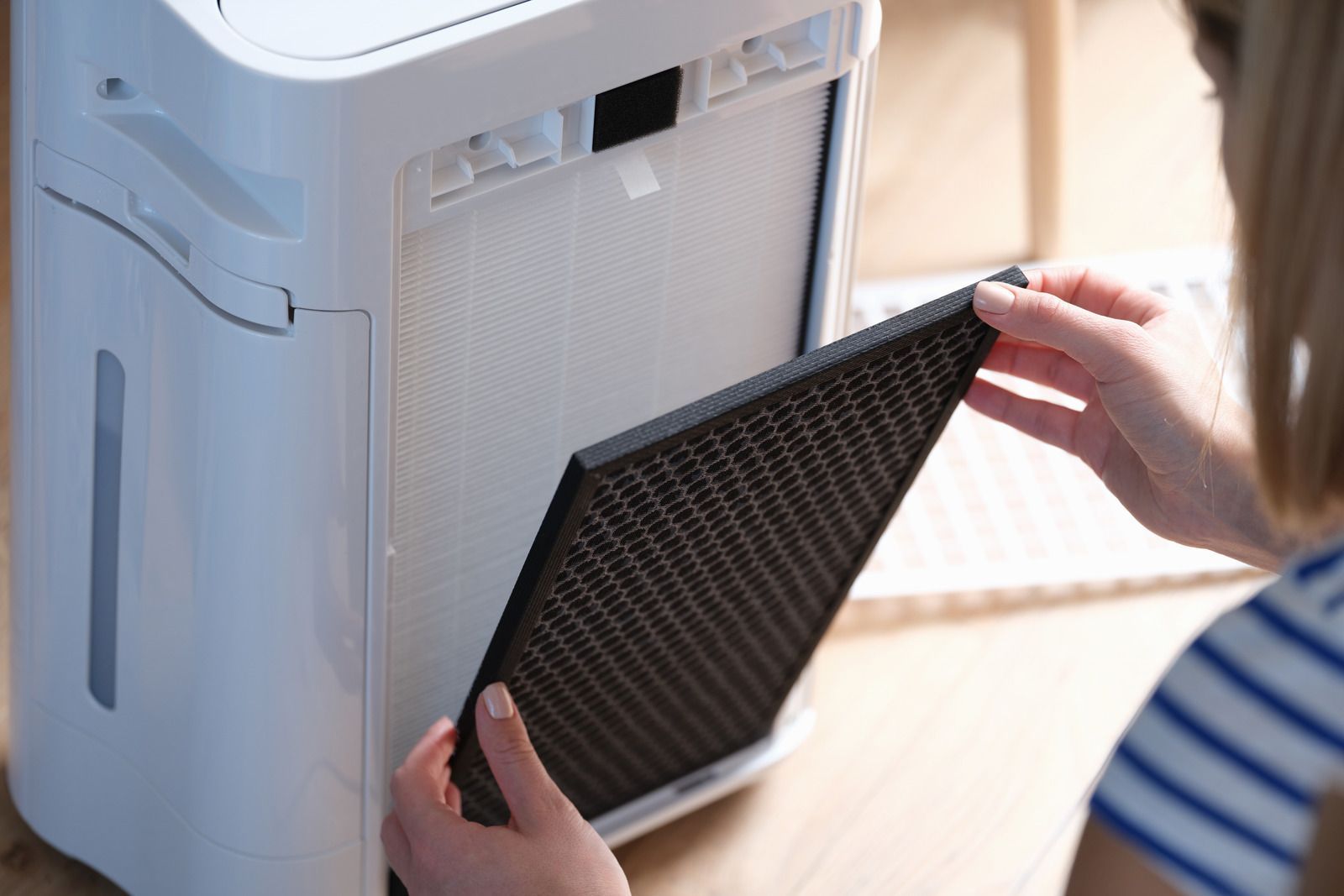
EVERY HOUSE HAS AN AIR BUDGET.
A house exchanges only so much air with the outdoors in a day, and the tighter it is built the less it exchanges. Everything released inside stays in that budget: cooking byproducts, off-gassing from cabinets and carpet, cleaning solvents, dander, smoke, and whatever the furnace pulls out of the crawl space. Nothing here is visible, which is why people live with it for years.
Testing turns that invisible budget into real numbers. Once you can see which pollutant is running high and where it enters, the fix is usually specific and modest rather than an expensive whole-house guess.
- Screening for mold spores, dust, dander, and pollen
- Formaldehyde and solvent fume detection
- Sampling in the rooms you actually use
- Findings written in plain language
AIR PURIFICATION
SEALED TIGHT FOR WINTER, AND HOLDING EVERYTHING IN.
Minnesota houses are built to hold heat, and they do it by holding air. Weatherstripping, spray foam, tight sheathing, and sealed rim joists all cut the heating bill and cut the natural air exchange along with it. From October through April the windows stay shut, the furnace recirculates the same volume, and anything released indoors accumulates instead of leaving. That is the season when symptoms show up.
NEW SUBDIVISIONS BREATHE LESS THAN OLD FARMHOUSES.
The homes going up around Elk River, MN and Otsego are far more efficient than the 1950s ramblers a few blocks away, and far less forgiving about indoor sources. A drafty old house dilutes its own pollutants by accident. A new one needs mechanical ventilation working correctly to do the same job, and we check whether it is actually running and doing that.
WE MEASURE FIRST BECAUSE AIR LIES.
A room can smell fine and still carry a formaldehyde load off new cabinetry. A room can smell terrible and test clean, with the odor coming from a dry drain trap. Noses are unreliable instruments. 20 years of sampling houses in this part of Minnesota has taught us to skip the assumption and put a meter in the room, then read the number against what the household is experiencing.
WHY CHOOSE US FOR AIR PURIFICATION.
YOU FIND THE SOURCE
A single reading points somewhere: the crawl space, the attached garage, the new flooring, the humidifier. Knowing which one is responsible turns a vague complaint about stuffy air into a specific repair somebody can actually make this week.
SYMPTOMS GET AN EXPLANATION
Morning headaches, a cough that clears at the office, allergy season that runs all winter: these track back to something measurable more often than not. Numbers give a doctor and a contractor the same starting point to work from.
SPENDING GOES WHERE IT WORKS
Buying a filtration unit before testing is a guess that often misses. Data tells you whether the answer is a sealed crawl space, a working bath fan, a better furnace filter, or nothing at all beyond a habit change.
CHILDREN AND ELDERS BENEFIT MOST
The people home all day breathe the most of whatever is circulating. Cleaning up the air in a nursery, a home office, or a room where somebody recovers matters far more than cleaning it up in a garage.
A BASELINE YOU CAN REPEAT
Testing before and after a change shows whether the change worked. That is how you know a new vapor barrier, a fresh air intake, or a filter upgrade actually moved the reading rather than merely sounding sensible on paper.
HONEST RESULTS EITHER WAY
Half of everything we report ends up being reassurance. When the readings come back normal, that is the finding, and nobody gets talked into equipment they do not need. A clean result is worth the visit on its own.
WHAT WE TEST
OUR AIR PURIFICATION WORK
Six areas cover nearly every complaint we hear about indoor air. Some jobs need one, some need the full set, and the walkthrough decides which before any sampling equipment comes out of the truck.
WHOLE HOUSE
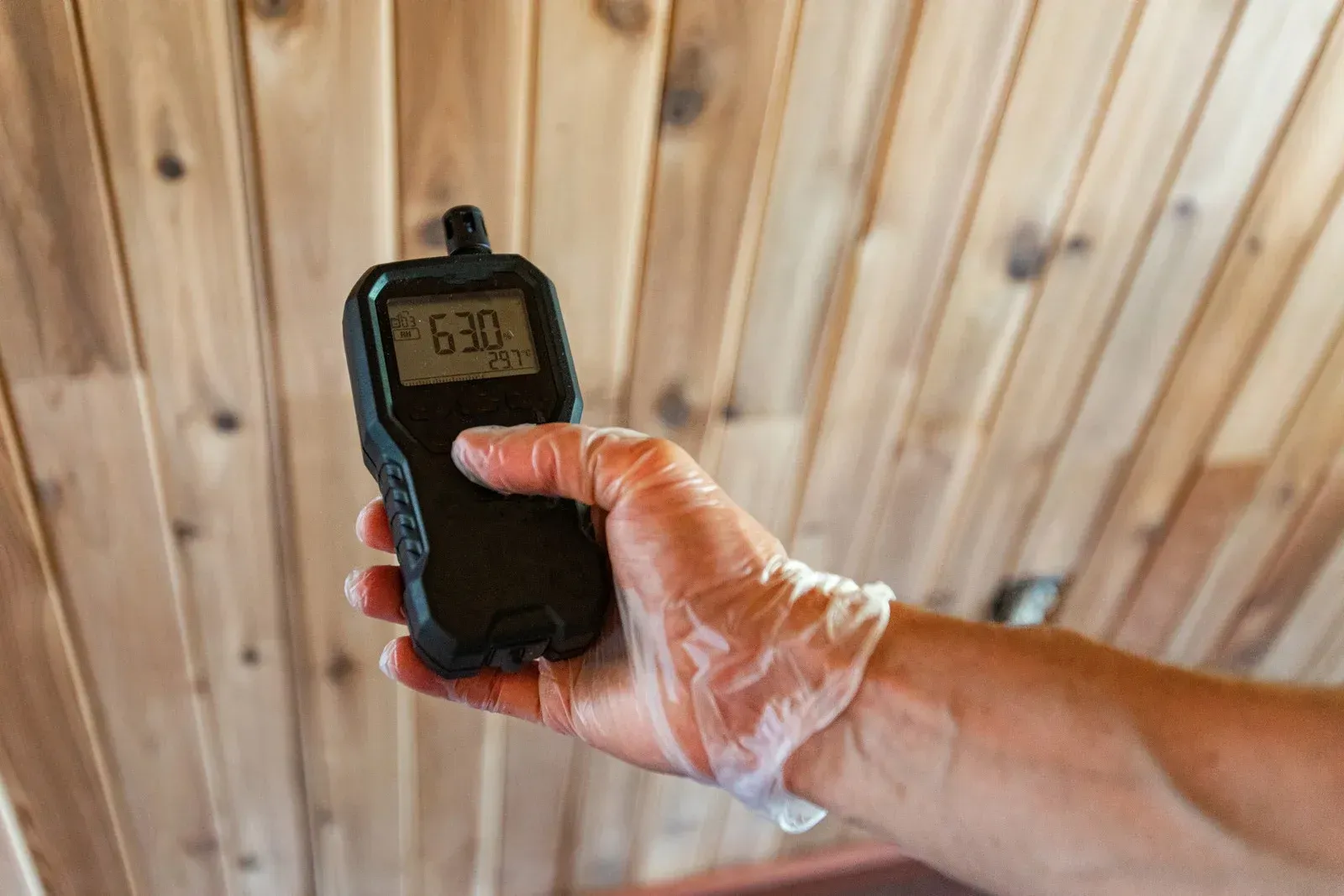
Indoor Air Quality Testing
Sampling in the rooms people actually occupy, not just the utility area, with an outdoor comparison taken the same day. The report names each pollutant found, its level, and the most likely path it took to get inside.
SPORE COUNTS
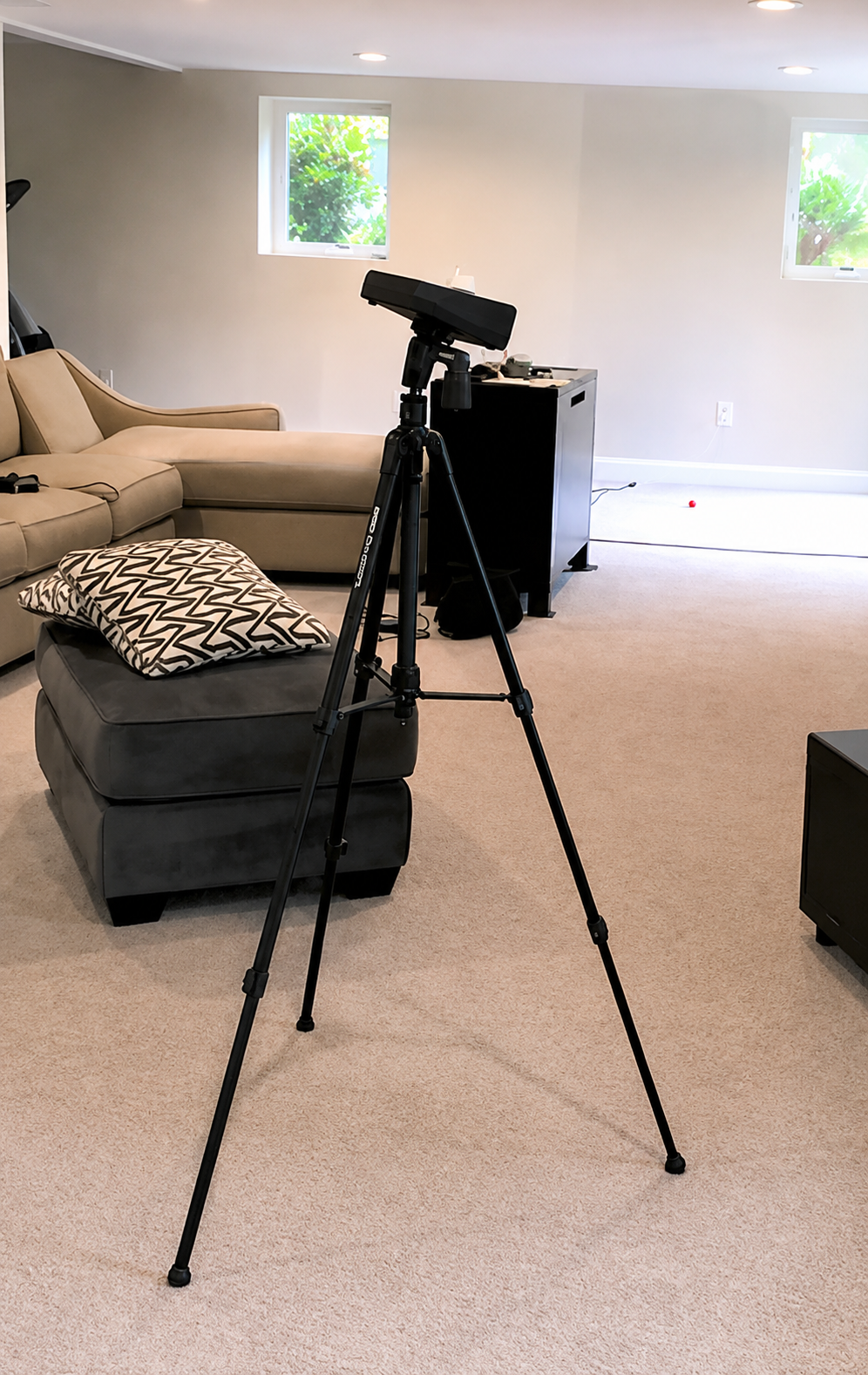
Mold Spore Air Sampling
Spore trap cassettes pull a measured volume of air and a laboratory counts what is on them by type. Elevated indoor counts against the outdoor baseline mean growth somewhere in the building, even with nothing at all visible.
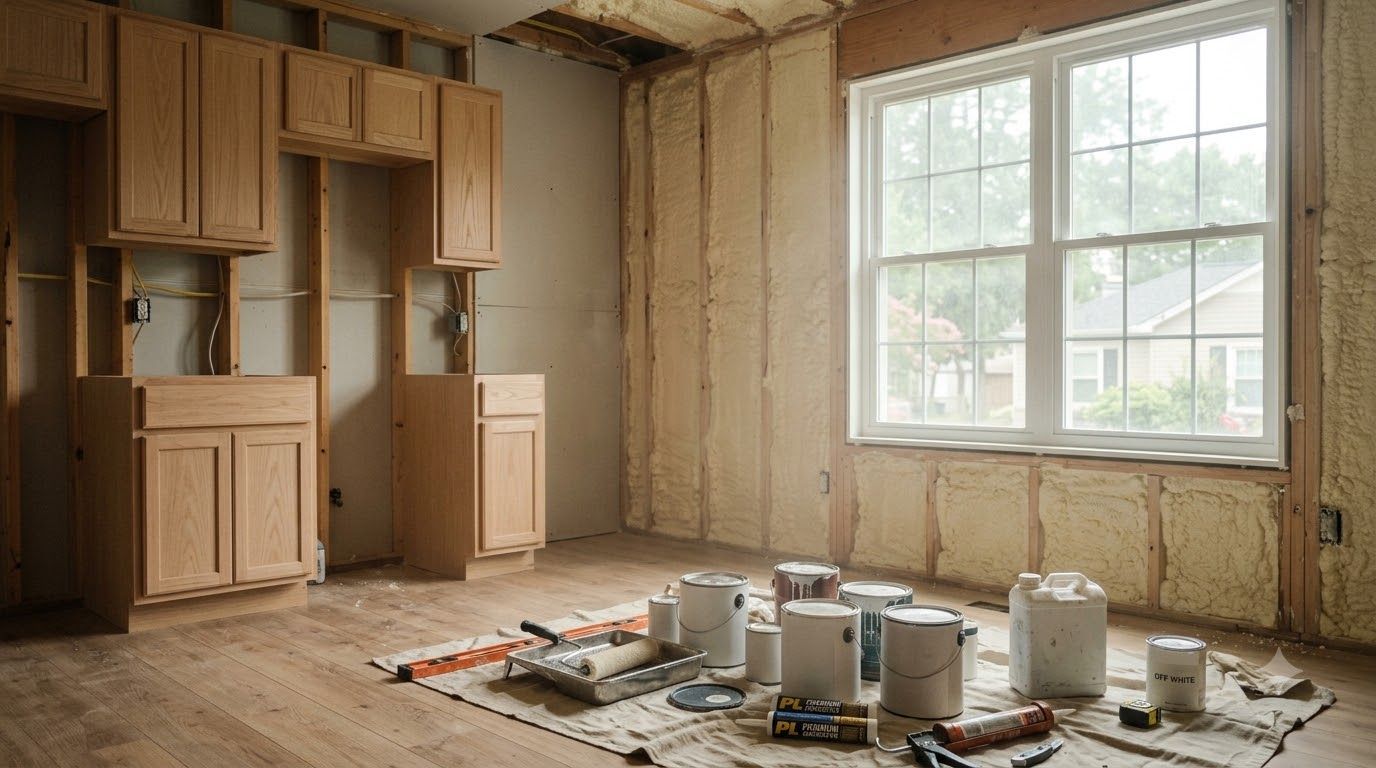
CHEMICAL LOAD
VOC and Formaldehyde Screening
New cabinetry, laminate flooring, spray foam insulation, adhesives, paints, and stored solvents all release compounds into a closed house. Screening tells you whether the level warrants ventilation changes or simply time and patience while the material finishes off-gassing.
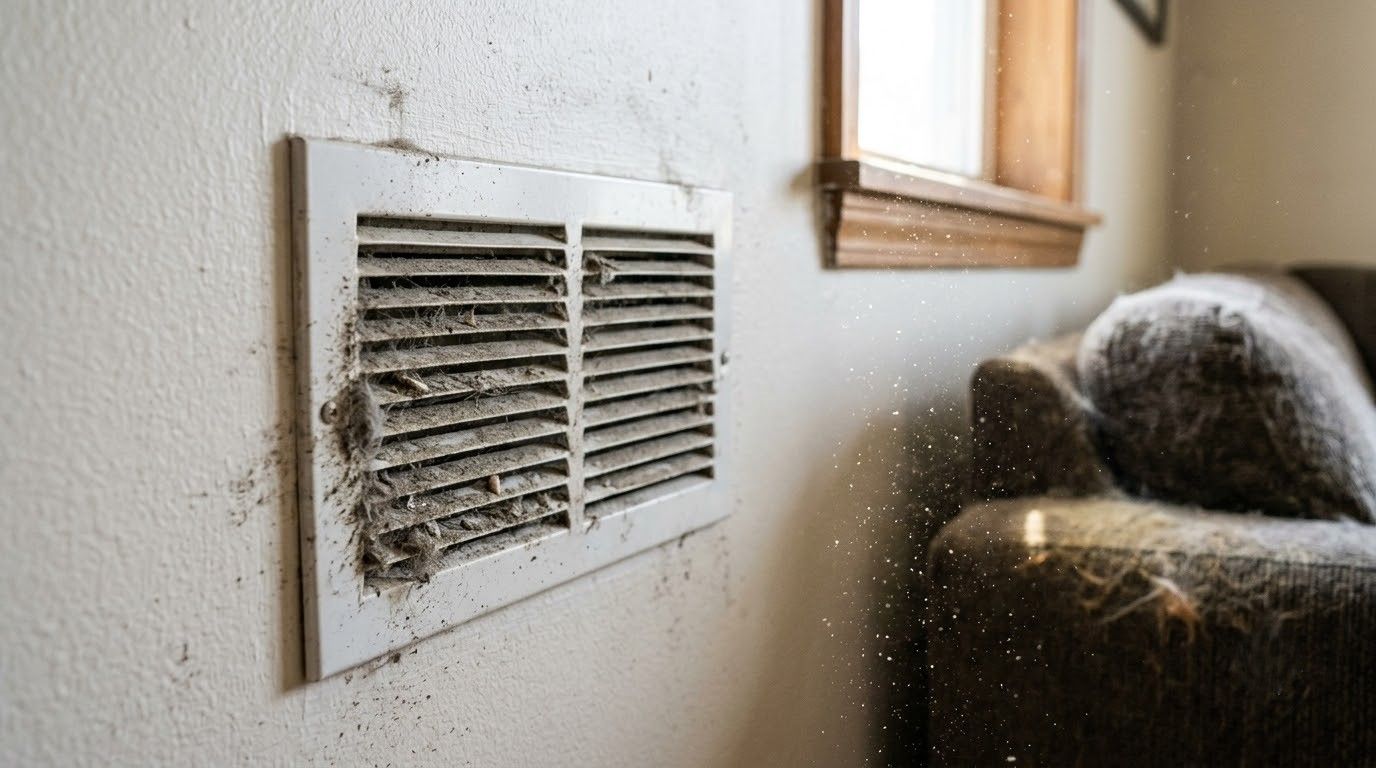
PARTICLE COUNT
Dust, Dander, and Pollen Assessment
Fine particles from pets, textiles, wood smoke, and outdoor pollen ride the ductwork and settle everywhere. Measuring the load shows whether filtration, source removal, or a duct problem is driving what people in the house are reacting to.
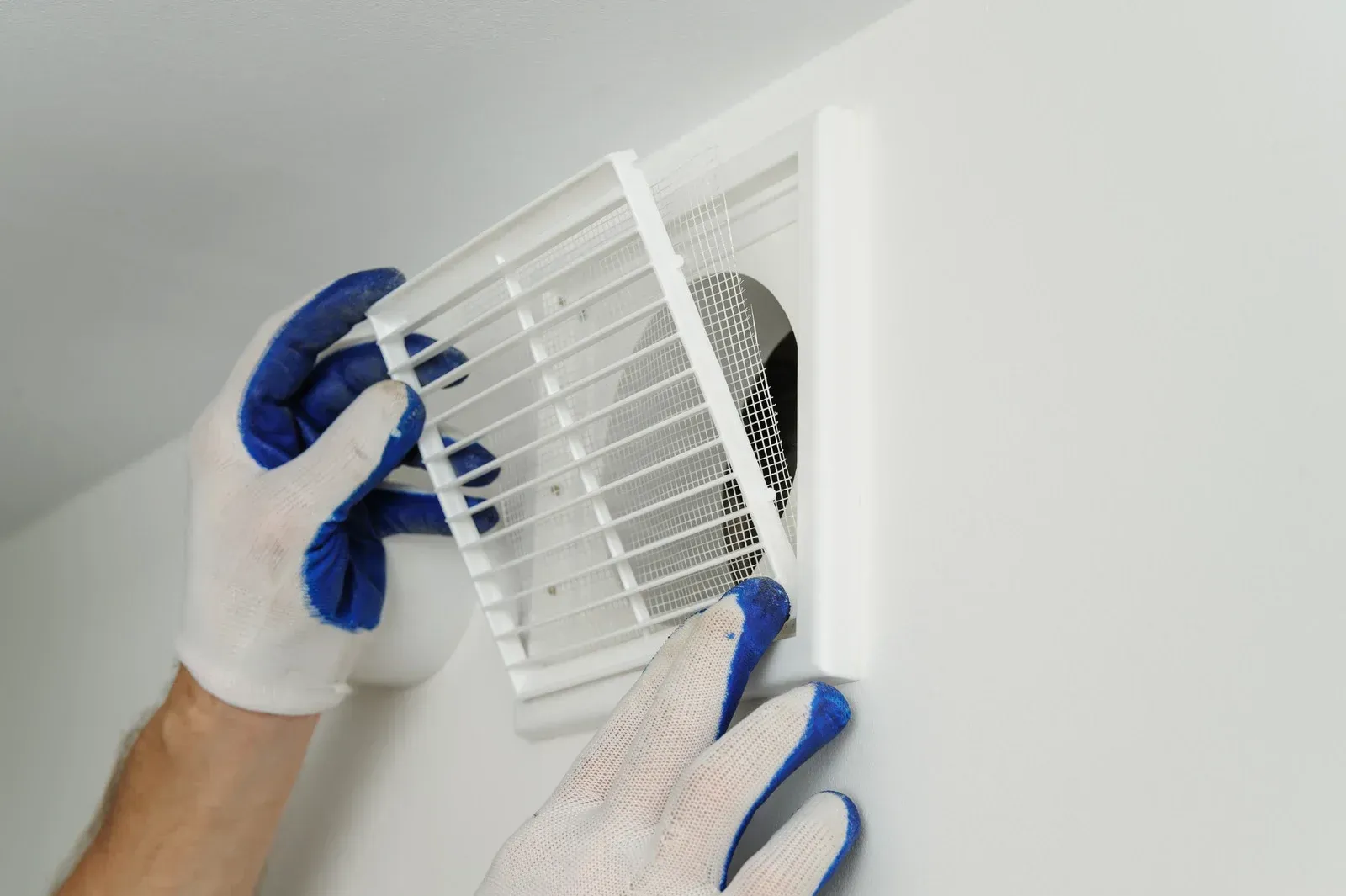
MOISTURE LOAD
Humidity and Ventilation Review
Relative humidity logged over time, bath and kitchen fans checked for real airflow, and dryer venting confirmed to the exterior. Most indoor air complaints in winter trace back to one of these three being set up badly wrong.
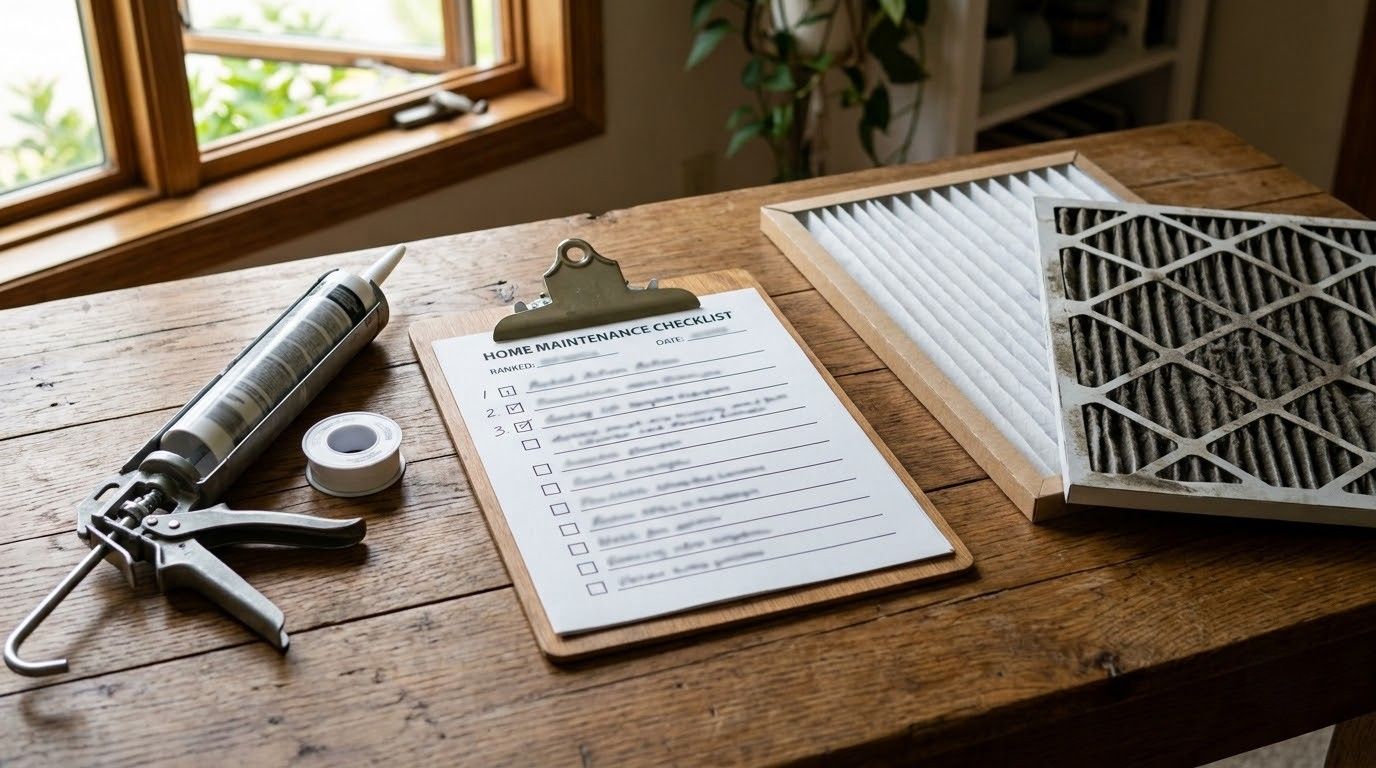
THE FIX
Purification and Correction Recommendations
Results come with a ranked list: what to remove, what to seal, what to ventilate, and only then what to filter. Each item is tied to a specific reading rather than a general upgrade somebody wants to sell.
Common Questions
FREQUENTLY ASKED QUESTIONS.
Indoor air questions tend to arrive after a season of symptoms nobody could explain. These are the ones we answer most often before scheduling a test in someone's house.
What does an indoor air quality test measure?
Typically mold spores, particulates, volatile organic compounds, formaldehyde, carbon dioxide as a ventilation indicator, relative humidity, and temperature. Which ones get sampled depends on the symptoms described and on what the walkthrough turns up in the first hour.
What are the signs of poor indoor air quality in a home?
Stale or stuffy rooms, condensation on windows, symptoms that ease when you go out, and dust that returns days after cleaning. GNL Enterprises, LLC hears all four of these regularly from households across Elk River, MN in midwinter.
How often should indoor air quality be tested?
Once as a baseline, then after any event that changes the picture: a renovation, new flooring, a water leak, a new furnace, or a move into an unfamiliar older house. Symptoms nobody can explain are the other trigger.
Can an air purifier remove mold spores?
A good HEPA unit captures spores drifting through the room it sits in. It does nothing about the colony producing them, so a purifier running next to a wet wall is treating the symptom and nothing else, forever.
What is a good VOC level in a home?
There is no single legal limit for residential total volatile organic compounds, so results are read as low, moderate, or elevated against typical housing. What matters more is identifying the source and whether the level falls after ventilation.
Does opening windows in winter improve indoor air quality?
Briefly and expensively. 10 minutes of cross ventilation flushes a stuffy room, but Minnesota heating costs make it a poor daily strategy. Mechanical ventilation with heat recovery does the same job without dumping all the heat straight outside.
Where does formaldehyde in a house come from?
Pressed wood products, mostly: particleboard cabinets, MDF trim and doors, laminate flooring, and some insulation and fabrics. GNL Enterprises, LLC finds the highest readings in Elk River, MN houses within the first year or so of a major remodel.
Can bad indoor air affect sleep?
It can. Carbon dioxide climbing steadily overnight in a closed bedroom, low humidity drying out airways, and particulates irritating them all show up as restless sleep and morning grogginess that a second cup of coffee does not fix.
HOW WE WORK
FROM WALKTHROUGH TO CLEAN READING, HERE IS HOW.
STEP 01
Listen to the Symptoms
Who feels it, in which rooms, at what time of day, and whether it improves when you are away from the house. That pattern narrows the likely sources considerably before any sampling equipment comes out of the truck.
STEP 02
Walk the Whole Building
Crawl space, basement, attic, attached garage, mechanical room, and the rooms in question. Sources hide in places nobody associates with air: a dryer venting into a wall cavity, a floor drain that dried out months ago.
STEP 03
Place the Sampling Equipment
Spore traps, particle counters, VOC meters, and data loggers go into the rooms that matter, with an outdoor control running at the same time. Doors and windows stay in their normal everyday positions throughout.
STEP 04
Read the Numbers Together
Lab results and logged data come back as a comparison against the outdoor baseline and against typical housing. We go through it with you rather than emailing over a spreadsheet and calling it a report.
STEP 05
Fix the Source First
Sealing a crawl space, correcting a fan, venting a dryer properly, or removing a material beats adding filtration every time. Filtration is the last step, not the first, and often it turns out to be unnecessary.
STEP 06
Retest and Confirm
A follow-up sample after the corrections proves the change worked. That second number is what turns a recommendation into a result, and it belongs in your file right alongside the first one.
SCHEDULE AN INSPECTION
FIND OUT WHAT YOU HAVE BEEN BREATHING SINCE OCTOBER.
Nobody should have to guess why a house makes them tired. A few hours of sampling turns a vague suspicion into a list of readings, and most of the time the correction is smaller and cheaper than the worry that prompted the call. GNL Enterprises, LLC tests indoor air across Elk River, MN and the surrounding communities, and tells you plainly when nothing needs doing. Reach us through the contact page and describe what you are noticing.
WHAT YOUR AIR QUALITY TEST COVERS:
- Sampling in the rooms you actually use
- An outdoor control taken the same day
- Mold spore, particulate, and VOC screening
- Humidity and ventilation performance checked
- A ranked list of corrections, cheapest first
- A follow-up reading to confirm the fix